Teenagers Can Sign $40K Loans but Can't Post Fanfiction?
When I was eleven, I contracted a near-fatal eye infection that ate through most of my right eye. During treatment, doctors discussed removing it entirely. My mother didn't feel comfortable making that choice for me, so she and my medical team left the decision to me—an eleven-year-old kid facing the possibility of losing part of my body forever.
I chose to keep the eye. Even knowing it hadn't worked in nine years and probably wouldn't work in the future without some wild scientific breakthrough, my reasoning was simple: if I got rid of it and science later found a way to save it, I'd no longer have it to save. So we kept it. I went through incredibly painful treatments, but it was my choice, and I found comfort in knowing I had a say in what happened to my body.
Four years later, at fifteen, State Services for the Blind started getting involved in my academic life, preparing me for college. I was expected to sign forms giving them authority to advocate for me, pay for needed services, and help with things like FAFSA applications. I signed contracts with government agencies that made me legally liable for expensive assistive technology equipment and the cost of services—real financial obligations with real consequences if I didn't honor my end.
This experience isn't unusual. Most of my friends were talked into signing financial loan applications at fifteen and sixteen, taking on contracts that would follow them for decades. Many signed those papers without understanding what they were agreeing to, then failed to complete their schooling and got stuck paying back predatory loans they'd never been taught to recognize.
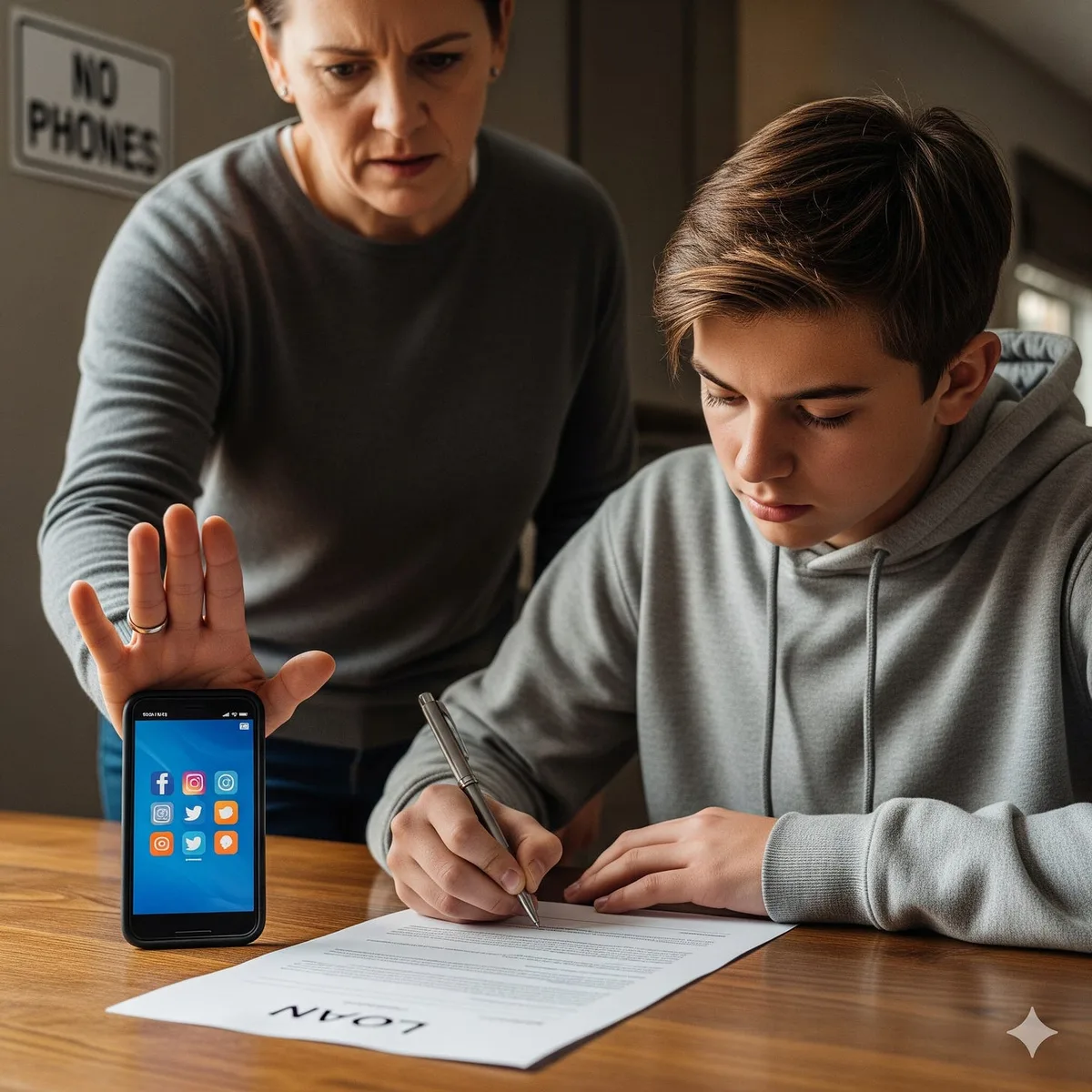
Here's what makes this infuriating: that same fifteen-year-old who could sign legally binding contracts with state agencies can't create an Instagram account without parental permission in multiple U.S. states. A seventeen-year-old can take on tens of thousands of dollars in federal student loan debt that will follow them for decades, but they need mom's signature to post fanfiction on Archive of Our Own if certain lawmakers get their way.
The contradiction isn't subtle. It reveals something ugly about how our legal system actually works.
As I documented in "Kids Belong Online," we're already seeing platforms like Bluesky block entire states rather than build surveillance infrastructure for age verification. But the deeper issue runs beyond digital access—it's about the arbitrary nature of when we trust young people with life-altering decisions.
The Student Loan Exception: When Teenagers Become Adults
Federal law makes this crystal clear. Under the Higher Education Act, there's no minimum age for federal student loans. A sixteen-year-old can walk into a financial aid office and sign promissory notes for Direct Loans without a cosigner, without proof of income, without any of the safeguards we require for literally every other type of borrowing.
Here's the kicker: the law explicitly removes the "defense of infancy"—the legal doctrine that normally lets minors void contracts they signed before turning eighteen. When it comes to student loans, that protection disappears. Sign the papers at seventeen? You're legally an adult for debt purposes, even if you can't buy a beer for four more years.
One in four young adults carries this debt—and the average balance under 25 is already over $14,000. But those figures hide the real scope. Some borrowers graduate with debt well over $40,000. That's more than many people make in a year, signed for by teenagers who've never balanced a checkbook.
Meanwhile, those same teenagers face a completely different legal reality everywhere else. Want to open a checking account? Most states require you to be eighteen, or have a parent co-sign. Credit card? Good luck getting approved under twenty-one without demonstrating independent income, thanks to the CARD Act. Car loan? You'll need that cosigner. Apartment lease? Again, eighteen minimum in most states, with Alabama and Nebraska requiring nineteen.
Debt? Fine. Credit card? Absolutely not.
The pattern is unmistakable: we've decided teenagers can handle massive, non-dischargeable debt but not day-to-day financial responsibility.
Digital Paternalism Goes National
While federal law treats minors as sophisticated borrowers, state legislators are moving in the opposite direction for digital spaces. The contradiction becomes absurd when you map it onto real lives.
Arkansas's original Social Media Safety Act would have required parental consent for anyone under eighteen to create social media accounts. A federal judge permanently blocked the law in March 2025, finding it violated the First Amendment, but Arkansas responded with new legislation that narrows the age requirement to under sixteen while still imposing algorithmic restrictions and parental oversight requirements.
Utah requires age-assurance systems and bans autoplay and endless scroll by default. The state presumes social media algorithms cause mental health harm to minors unless platforms obtain parental consent or limit engagement features.
Texas's SCOPE Act, currently stayed pending litigation, requires age verification for all users and extensive parental controls for minors. While a federal court blocked some of the law's "harm prevention" provisions, it still mandates parental consent for certain purchases and data-sharing activities by minors.
It's a bizarre split-screen: a teen can sign $50,000 of debt at the FAFSA office in the morning, then watch the same government declare them too fragile to scroll TikTok that night.
Civil liberties groups call this what it is: censorship dressed up as safety. But the digital restrictions go beyond social media. COPPA already bars children under thirteen from most online platforms without parental consent, treating anyone under that age as incapable of understanding data collection. The Children's Online Privacy Protection Act allows penalties up to $53,088 per violation, creating enormous pressure for platforms to either verify ages or exclude younger users entirely.
When Age Becomes Arbitrary
The pattern reveals something deeper than policy inconsistency—it shows how we use age restrictions to serve different interests rather than protect young people.
Student loans represent a massive transfer of wealth from young people to universities and lending servicers. The system works precisely because borrowers don't understand what they're signing. Financial literacy education remains optional in most states, while loan applications flow freely to anyone who wants college access.
When I signed a loan for massage therapy school at twenty-three—old enough to know better, supposedly—I still fell into a predatory lending trap. I didn't know what questions to ask or what contract terms mattered most. That loan followed me for years afterward. The system profits from confusion and uninformed decisions. People who sign predatory loans make lenders more money than borrowers who understand the terms and shop around. There's no incentive to provide financial education when ignorance generates revenue.
Digital restrictions operate from completely different motivations. These laws aren't about protecting young people from exploitation—they're about controlling access to information and community. The ACLU calls these bans unconstitutional censorship, and they're right. Advocates like Let Grow point out that overprotection in the name of safety stunts resilience—the same logic applies online. When platforms face expensive compliance requirements, they make predictable choices: exclude users entirely or hand more control to the tech giants that can afford comprehensive age verification systems.
Small platforms like Bluesky responded to Mississippi's age verification law by blocking the entire state. Larger platforms will comply, absorbing costs that kill their smaller competitors. The result isn't child safety—it's market consolidation disguised as protection.
The Information Problem
My experience at eleven offers a different model. When doctors needed my decision about removing my eye, they didn't withhold information because of my age. They explained the risks, the prognosis, the long-term implications. They gave me everything I needed to make an informed choice.
That's all it took—actual information, presented clearly.
So why do we treat information like it's more dangerous than a $40,000 loan that follows someone for life?
But our current system does the opposite. We keep young people financially illiterate while expecting them to make sophisticated borrowing decisions. We restrict their access to online communities while trusting them with life-altering debt. We create arbitrary age cutoffs that serve institutional interests rather than protecting individual development.
The contrast with other countries is striking. Many European nations provide comprehensive financial education starting in elementary school. Students learn about compound interest, loan terms, and debt management years before they can borrow money. Some countries restrict student borrowing or provide generous grants that reduce debt burdens.
Yet these same countries often have more restrictive approaches to children's online activities. The difference is they're consistent about it—if you can't handle social media, you probably shouldn't be taking on mortgage-sized debt either.
Building Toward Real Solutions
The contradictions in youth autonomy laws aren't accidents. They reflect deliberate choices about who profits from keeping young people uninformed and dependent.
Financial institutions benefit from borrowers who don't understand loan terms. Universities benefit from easy federal money that lets them raise prices without losing students. Social media platforms benefit when age verification requirements eliminate their smaller competitors.
None of these arrangements prioritize young people's actual development or wellbeing.
Real protection would look completely different. It would start with comprehensive financial literacy education before anyone could sign loan documents. It would include strong consumer protections for all borrowers, regardless of age. It would treat access to information and community as fundamental rights rather than privileges to be gatekept.
But recognizing these contradictions is just the beginning. The deeper question is why even Big Tech companies—the supposed beneficiaries of an anything-goes internet—are quietly supporting many of these restrictive laws.
That story reveals something much darker about corporate power and the illusion of child safety. It's where we're heading next.
We're a country that lets teenagers mortgage their futures, but won't let them share a piece of fanfiction without a parent's permission slip. That's not protection. That's hypocrisy.
Sources and Context
The following sources were used in researching and writing this article. Each entry includes the specific context in which the information was used to ensure transparency about the research foundation.
Federal Student Aid Handbook (2023-2024): Provided the legal basis establishing that there is no minimum age for federal Direct Loans and that the defense of infancy does not apply to federal student loan agreements. Used to document the legal framework that allows minors to sign binding loan agreements.
Finaid.org FAQs: Explained that the 1992 amendments to the Higher Education Act explicitly removed infancy defense protections for federal student loans and confirmed that minors do not require cosigners for federal loans. Used to clarify the legal mechanisms that make student loans an exception to normal contract law protections for minors.
Education Data Initiative Student Loan Statistics: Supplied current statistics showing that 25% of adults aged 18-29 carry student loan debt and that borrowers under 25 owe an average of $14,160. Used to quantify the debt burden young borrowers face and establish the scale of youth participation in federal lending programs.
Experian Credit Card and Banking Guides: Detailed age requirements for independent credit cards (18 in most states, 19 in Alabama and Nebraska) and the requirement for parental co-ownership of bank accounts for minors. Used to contrast student loan accessibility with restrictions on other financial products.
Bank of America Teen Car Buying Guide: Documented that minors cannot independently own vehicles or obtain auto loans, with even 18-year-olds typically requiring cosigners. Used to illustrate the inconsistency in financial autonomy policies.
Bay Management Group Apartment Leasing Guide: Confirmed that most states require tenants to be 18 or older for independent leases, with some states setting higher age requirements. Used to show housing access restrictions that contrast with loan accessibility.
Axios Report on Arkansas Social Media Law: Documented U.S. District Judge Timothy L. Brooks's permanent injunction against Arkansas's original Social Media Safety Act in March 2025, including his findings that the law violated First Amendment rights. Used to explain court challenges to social media age verification requirements.
Inside Privacy Coverage of Arkansas Legislation: Provided details on Arkansas's replacement laws (HB 1717, SB 611, SB 612), including the narrowed definition of "minor" to under-16 and penalty structures up to $10,000 per violation per day. Used to show how states are adapting their approaches after court challenges.
Utah Government Social Media Website: Supplied official rationale and implementation details for Utah's SB 194 and HB 464, including age-assurance systems, default privacy settings, and presumptions of algorithmic harm to minors. Used to document state-level policy justifications and enforcement mechanisms.
Hunton Andrews Kurth Analysis of Texas SCOPE Act: Detailed Texas HB 18's requirements for age verification of all users and parental consent for minors under 18, along with content filtering and parental monitoring provisions. Used to show the scope of proposed digital restrictions compared to financial autonomy policies.
FTC COPPA Compliance FAQ: Provided current penalty amounts (up to $53,088 per violation) and enforcement mechanisms under the Children's Online Privacy Protection Act. Used to document existing federal restrictions on children's online activities and the financial pressure these create for platforms.
BigID COPPA 2025 Amendments Analysis: Summarized FTC updates requiring opt-in consent for targeted advertising and expanded personal information definitions. Used to show how federal digital privacy law continues evolving while student loan policies remain static.
Each source was selected for its credibility and direct relevance to documenting the legal and policy contradictions between financial and digital autonomy for young people. Statistical claims are drawn from peer-reviewed studies, government surveys, or industry reports with clear methodological documentation.
Comments
No comments yet. Be the first.
Leave a comment
Comments are moderated and appear once approved. Please remember to be respectful. Honest conversation and civil debates are fine and good, but no flames or trolling or you will be barred from commenting.