When Childhood Became a Crime
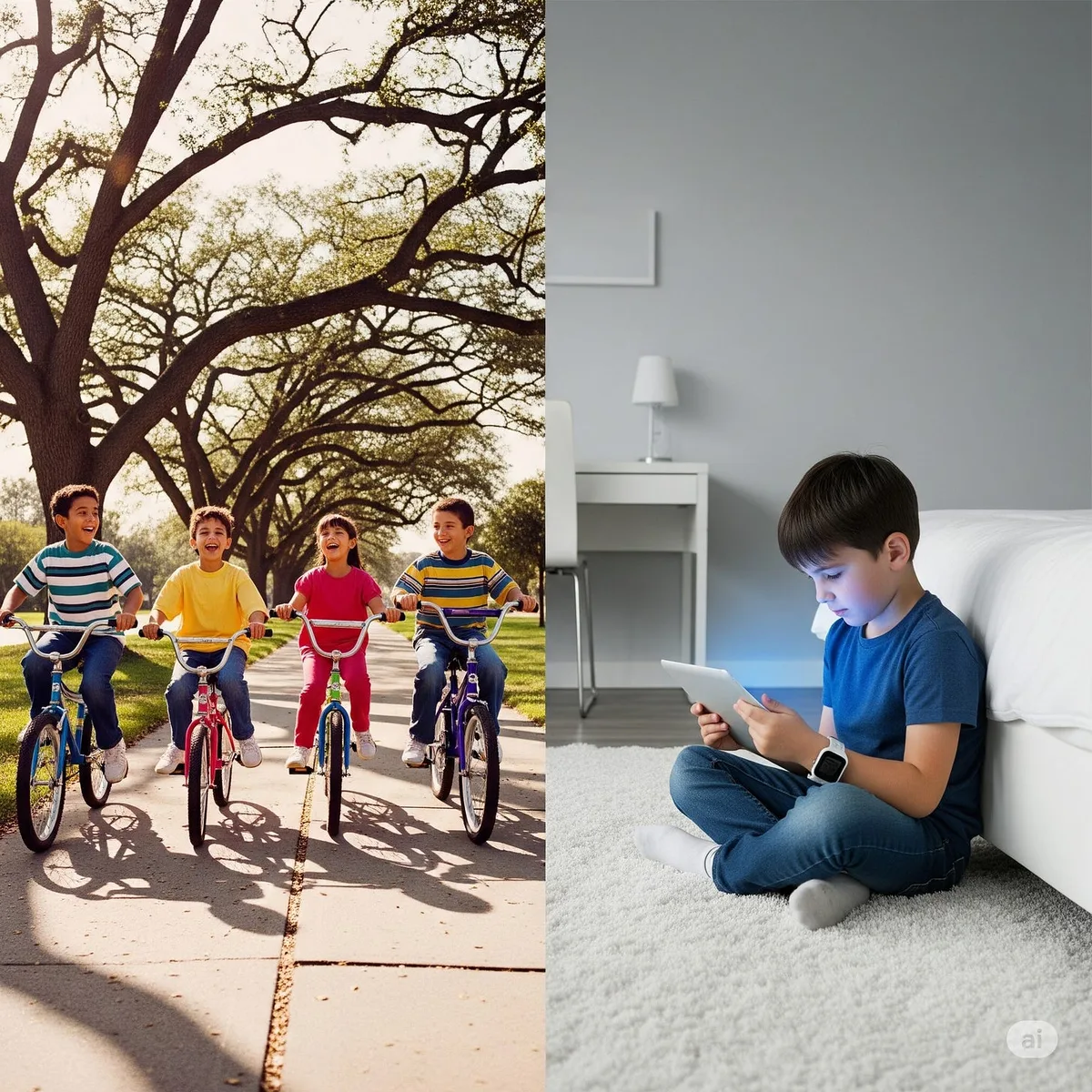
I was six years old when my mother let me and my nine-year-old sister play in the front yard of our house. No hovering adults, no constant supervision, just two kids figuring out the world. I made friends with neighborhood children, learned to navigate playground politics, and yes—I got hurt sometimes. I was a blind kid with vision issues, accident-prone by nature, but those bumps and bruises taught me invaluable lessons about safety, awareness, and the real consequences of risky behavior.
By nine, I was riding my bike around the neighborhood, going on adventures with kids of all ages, hanging out at friends' houses playing Nintendo 64 and PlayStation. Those unsupervised hours taught me more about independence, problem-solving, and genuine friendship than any structured activity ever could. My mother's philosophy was simple but revolutionary by today's standards: "Try anything once. Don't ever use your blindness as an excuse for why you can't do something. When you fall and get hurt, get up, shake it off, and try again."
I got to be a kid. I got to play, learn, and grow through real experience rather than sanitized simulation.
That world—the world where children could be children—is dying. In its place, we've constructed a surveillance state that treats childhood independence as a form of neglect and parental trust as a legal liability. We've created a system where GPS tracking devices masquerade as love, where every moment of unsupervised play becomes grounds for state intervention, and where the very experiences that build resilient, competent adults are increasingly criminalized.
My Preconceptions and What the Research Actually Shows
I've always felt helicopter parenting was overkill. The idea of kids being tracked and spied on at all times, from GPS devices to cameras in their bedrooms, has never sat well with me. Scheduled playdates with strictly approved and manufactured social situations felt unkid-like. When I look around at younger generations now and see the harm this has caused, it bothers me more.
But then I dove into this research this afternoon and suddenly found myself even more bothered than I expected.
It would be one thing if this state of control and over-parenting and overreach of protective services actually paid off somehow. If all this surveillance and restriction made children safer, happier, more successful—maybe the trade-off would make sense. Instead, the research reveals something far more disturbing: we're psychologically damaging children in the name of keeping them safe, and the evidence has been screaming this truth for years. We're just choosing not to listen.
The statistics tell a brutal story. A longitudinal study following 422 children from age two to ten revealed that kids whose parents were overcontrolling at age two showed poorer emotional and behavioral regulation by age five. This difficulty managing their own emotions predicted a cascade of problems at age ten—fewer social skills, difficulty adjusting to school, more emotional problems overall.
Dr. Peter Gray's research at Boston College shows that rates of anxiety, depression, and suicide among children have risen 8-10 times since the 1950s. The primary culprit? The systematic decline in independent activity and free play. When we eliminate children's opportunities to explore, take age-appropriate risks, and solve problems independently, we're creating mental illness.
Here's what makes my blood boil: we're doing this while crime rates have actually declined since the 1990s. The world is safer than it was during my bike-riding childhood, yet we're treating it like a war zone. The media feeds us edge case horror stories that stick in our minds while ignoring the statistical reality that children are safer today than they've been in decades.
When Playing Outside Became a Criminal Act
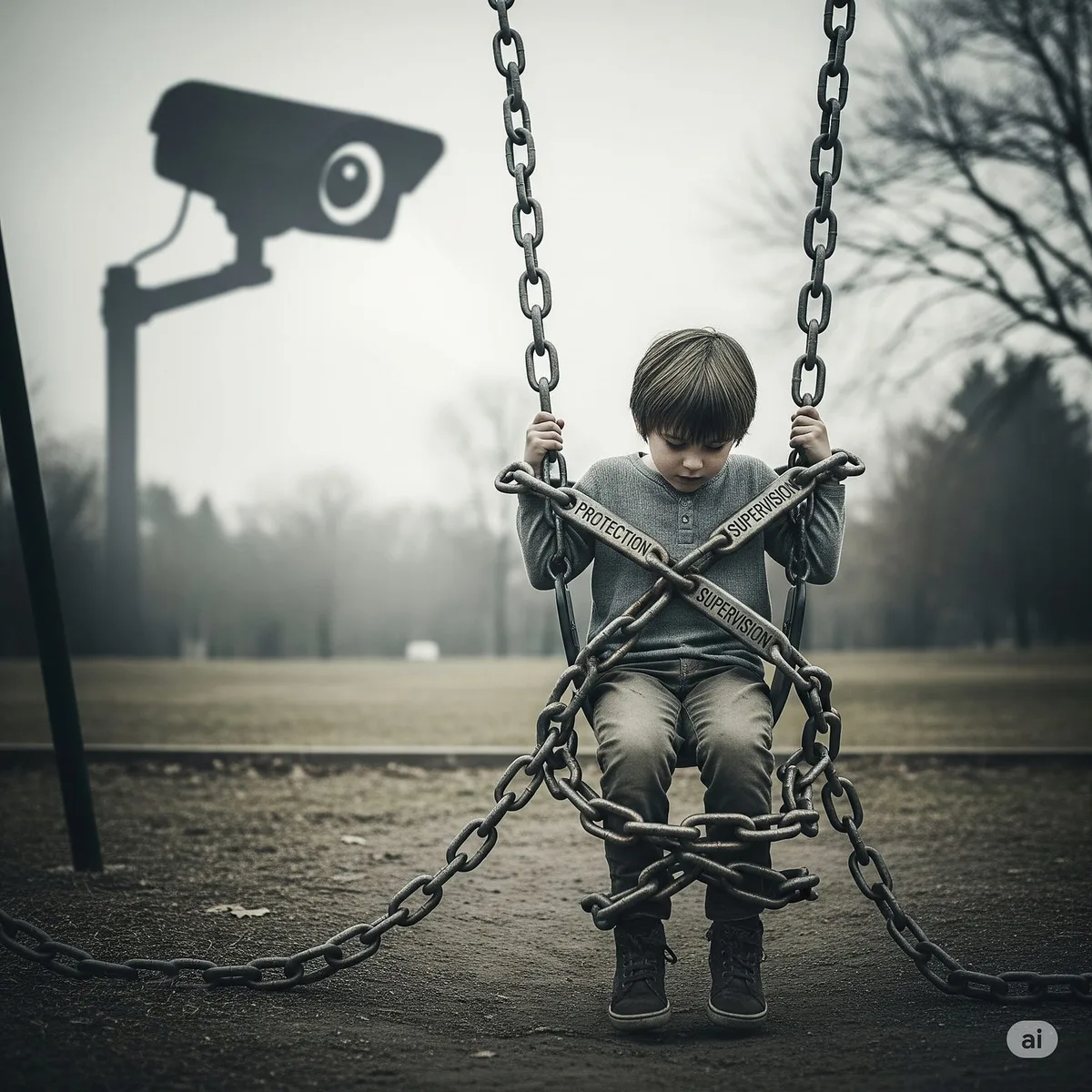
Emily Fields discovered just how dangerous this cultural shift has become. In rural Virginia, she allowed her children—ages four, six, and eight—to play outside. This simple act of parental trust triggered four separate CPS investigations. Caseworkers demanded that her children be directly supervised at all times, even inside their own bedrooms, until age 13. One investigator required a written "safety plan" where all adults in the household promised to monitor the children at every moment.
Fields complied because she understood the stakes: the state has the power to destroy families over subjective judgments about "proper supervision."
The child welfare system processes approximately 3.1 million investigations annually, with roughly 80% resulting in no finding of maltreatment. That means millions of families are subjected to traumatic state investigations for behavior that the system itself ultimately deems acceptable. The process becomes the punishment.
The problem starts with deliberately vague laws. Most state neglect statutes require "proper supervision" without defining what "proper" means. This grants enormous power to individual caseworkers, allowing their personal biases to determine what constitutes criminal neglect. When parents can't get clear legal guidelines, they're forced to adopt the most restrictive possible interpretation to avoid state intervention.
In Maryland, the Meitiv family faced investigation for letting their 10- and 6-year-old children walk home from a park. In Florida, Nicole Gainey was arrested and faced a potential five-year sentence for allowing her 7-year-old son to walk to a park. In South Carolina, Debra Harrell spent 17 days in jail and temporarily lost custody for letting her 9-year-old daughter play at a park while she worked.
These aren't isolated incidents—they're the inevitable result of a system that has criminalized normal parenting decisions.
The Digital Leash Generation
Today's parents have weaponized technology in service of hypervigilance. About half of U.S. parents track their adolescents via GPS apps, with 14% doing so without their child's knowledge. We've convinced ourselves this constant digital surveillance creates safety, but research shows the opposite.
Studies reveal that restrictive digital monitoring is positively correlated with parents' perception of their child's problematic internet use. Active monitoring—discussing content and behavior openly—shows no such correlation. When we spy on our children instead of talking to them, we create the very problems we're trying to prevent.
The psychological impact runs deep. A comprehensive analysis found that overprotective parenting correlates with the development of maladaptive thought patterns including dependence, social isolation, mistrust, and vulnerability to harm. These patterns become psychological vulnerabilities that last well into adulthood.
Think about what we're teaching children: that they can't be trusted, that the world is too dangerous for them to navigate, that their judgment is inherently flawed. We're raising a generation that's been conditioned to believe they can't handle responsibility because they've never been allowed to practice it.
Special Education and the Amplified Surveillance State
For children with disabilities, this surveillance culture becomes exponentially more damaging. In my research on special education's "autonomy paradox," I've documented how disabled children face the "velcro aide syndrome"—constant adult supervision that systematically destroys their capacity for independent thought and action.
The results speak for themselves: while the national graduation rate for all students is 87%, it drops to 71% for students with disabilities (NCES, 2023; K12 Dive, 2022). The employment rate for adults with disabilities is only 22.7%, compared to 65.5% for those without disabilities (U.S. Bureau of Labor Statistics, 2024). We're creating learned helplessness in the name of protection.
I've seen this dynamic play out in devastating ways throughout my own educational journey. Constant adult supervision teaches children that they're incapable of managing themselves. When helicopter parenting combines with special education's overprotective tendencies, it virtually guarantees that disabled children will never develop the independence they need as adults.
My friend, a PhD computer science professor teaching at Minnesota State University Mankato, experienced this surveillance culture firsthand as a legally blind student who was intellectually advanced:
"When I was a child in public school, I was confusing to the adults around me - I was simultaneously intellectually advanced compared to other kids and legally blind. Special Ed made a completely informal 'diagnosis' that I must have ADHD, because I was consistently 'off task' or 'not paying attention' in class. In truth, I was bored out of my mind and was finding creative ways to keep my mind occupied.
The response from Special Ed was to 'strongly recommend' that my parents have me evaluated for ADHD and to, in their words, 'put me on drugs' to 'address my behaviors'. My parents - thankfully - were wiser than this and recognized my 'behaviors' as being a result of my intelligence and boredom. When my parents tried to discuss this with school staff, they received subtle but obvious threats: that if they did not do as they were 'strongly advised' to do, CPS 'may' get involved - because, in their mind, my parents were not taking my 'medical issues' seriously, and their refusal to have me 'put on drugs' constituted 'child neglect.'
From that moment on, my parents walked on thin ice for the rest of my school career. I wasn't ultimately 'put on drugs', but my parents immediately found themselves trying to teach me how to avoid behaviors that would further Special Ed's 'diagnosis' - how to 'act appropriately' while simultaneously not wanting to kill the spark of curiosity that defined - and still defines - a huge part of who I am."
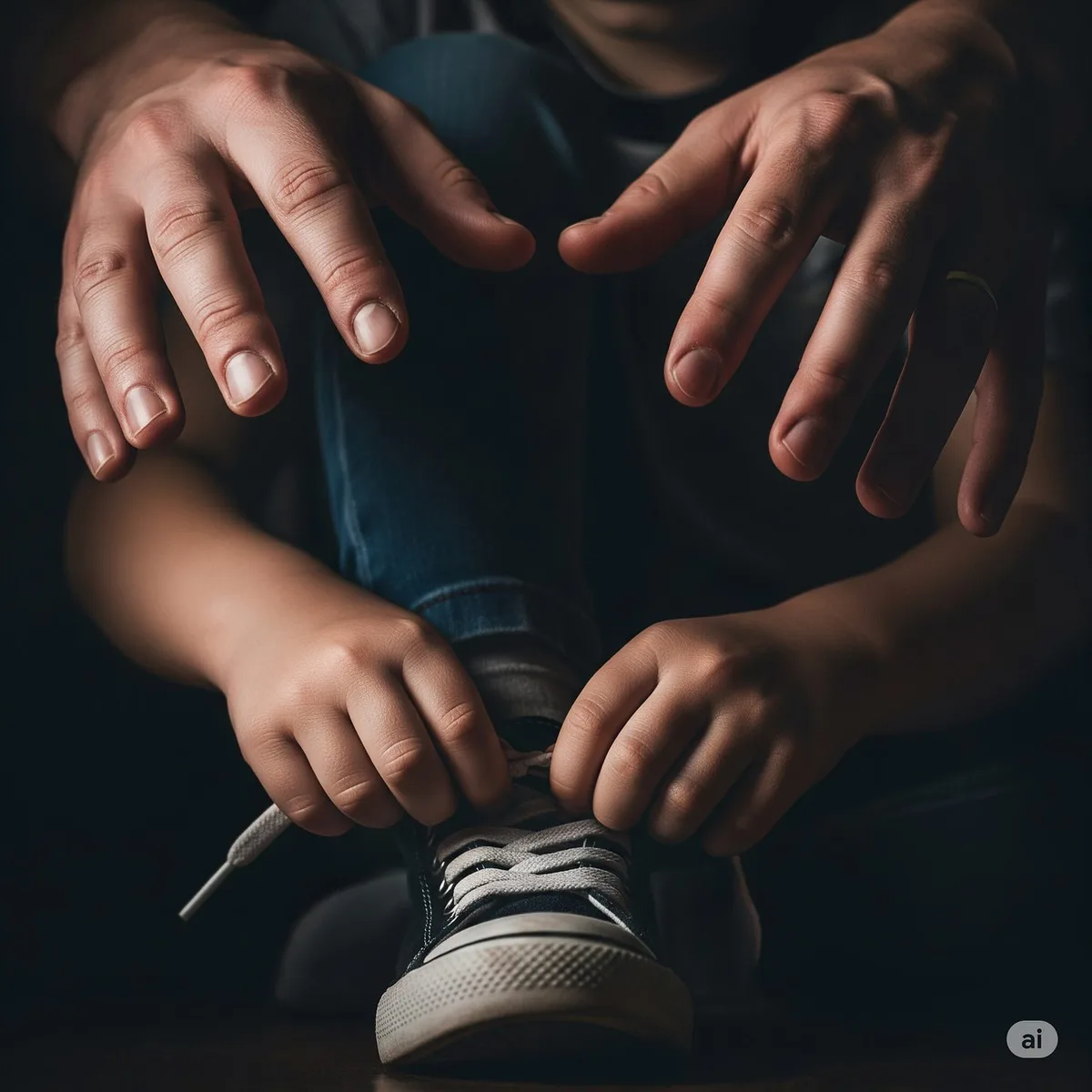
His experience reveals how the surveillance state extends beyond CPS into schools themselves, where educational professionals wield the threat of state intervention to coerce parents into compliance with questionable decisions. The tragedy extends beyond special education. I think about the kids I knew at the blind school, many of whom had been so overprotected that they couldn't tie their shoes, make basic decisions, or advocate for themselves. I think about the students I'll soon teach, arriving in classrooms having never been trusted to solve problems independently, and I have a great many concerns.
What Children Are Actually Losing
When I rode my bike around the neighborhood at nine, I learned to assess risks, navigate social conflicts, solve problems independently, and recover from failures. These experiences taught me that I was capable of handling challenges, building the foundation of self-efficacy that serves me today.
Today's children are systematically denied these learning opportunities. Instead of developing genuine competence through real-world experience, they're given the illusion of safety through constant supervision. We're trading authentic confidence for artificial protection.
The Michigan State University Extension warns that overprotected children are more likely to lie to avoid punishment, become overly fearful of normal risks, and engage in more dangerous risk-taking later in life. They develop what psychologist Padraic Gibson calls the "golden cage" syndrome—feeling both cherished and incompetent, loved but incapable.
Research on peer relationships shows that children with overprotective parents report poorer social skills and more difficulty with friendships. When adults constantly mediate children's interactions, children never learn to negotiate conflicts, establish boundaries, or build authentic relationships on their own.
Perhaps most tragically, we're creating a generation that lacks resilience. The Harvard Study of Adult Development, which followed subjects for over 80 years, found that warm, stable childhoods that fostered autonomy predicted better mental health, higher income, better cognitive functioning, and greater life satisfaction in old age.
What Other Countries Know That We've Forgotten

Meanwhile, other countries show us what we're missing. In Japan, preschoolers regularly run errands alone, featured in the popular documentary "Old Enough!" Japanese neighborhoods are designed to support children's independence through safe pedestrian environments and cultural norms of mutual responsibility.
Many African and Indigenous cultures maintain traditions of communal child-rearing that foster early autonomy and cooperation. Children learn through participating in daily tasks and caring for younger siblings, developing competence through contribution rather than consumption.
Crime statistics show that stranger abduction—the fear driving much of this surveillance—is extremely rare among missing child cases. We're organizing our entire approach to childhood around statistical outliers while ignoring the documented harms of overprotection.
The Fightback Begins

Some states are fighting back. Eight states have now passed "Reasonable Childhood Independence" laws: Utah, Texas, Oklahoma, Colorado, Virginia, Connecticut, Illinois, and Montana. These laws specify that parents aren't neglectful when allowing children to engage in age-appropriate activities like walking to school, playing outside, or staying home briefly unless the child faces obvious and immediate danger.
But these laws address only the symptom. The fundamental problem runs deeper than legal ambiguity—it's a cultural shift that treats childhood independence as inherently dangerous rather than developmentally necessary.
At some point, we have to acknowledge that this surveillance state isn't really about protecting kids anymore. It's become another means of controlling them and making them into what we want by our own hands, rather than letting them learn and grow into themselves naturally. We've created a system where children exist to ease adult anxiety rather than to develop into capable human beings.
The solution requires courage from parents willing to prioritize their children's long-term development over short-term anxiety. Schools need to support independence rather than dependence. Communities need to create infrastructure that enables safe exploration rather than eliminate all possibility of risk.
Most importantly, we need to remember what childhood is supposed to be: a time of exploration, discovery, and growth through real-world experience. A chance for kids to figure out who they are through trial and error, success and failure, joy and disappointment.
I got to be a kid in the 1990s. I learned through doing, failed safely, and developed the confidence to take on challenges as an adult. Every child deserves the same opportunity. The question is whether we'll give it to them, or whether we'll continue destroying childhood in the name of protection.
The children whose futures hang in the balance deserve better than the surveillance state we've created for them. They deserve the chance to be kids.
Sources and Context
The following sources were used to compile this article. Each entry includes the source information and the context in which it was used, providing transparency about the research foundation for this analysis.
Child Welfare Statistics and CPS Investigations:
U.S. Children's Bureau Child Maltreatment 2022 report: Provided current statistics on CPS referrals (4.276 million covering 7.53 million children), responses (3.096 million children), and substantiated cases (558,899 children, 74.3% involving neglect). Used to establish the scale of CPS investigations and the high rate of unsubstantiated cases.
Emily Fields Case Study:
Reason magazine article (August 2025): Documented the specific details of Emily Fields' experience with CPS investigations in Virginia, including the demands for constant supervision until age 13 and required written safety plans. Used to illustrate how vague neglect laws translate into real family experiences.
High-Profile Free-Range Parenting Cases:
Washington Post coverage of Maryland Meitiv family case (2015): Documented investigation of parents who allowed children ages 10 and 6 to walk home from a park. Used to show how normal activities became criminal investigations.
Reuters coverage of Florida Nicole Gainey case (2014): Detailed arrest and potential five-year sentence for allowing 7-year-old to walk to park. Used to demonstrate legal risks of allowing childhood independence.
CBS News coverage of South Carolina Debra Harrell case (2014): Described 17-day jail sentence and temporary loss of custody for letting 9-year-old play at park during work. Used to illustrate racial and class dimensions of childhood surveillance.
Longitudinal Child Development Research:
American Psychological Association study of 422 children (ages 2-10): Found that overcontrolling parenting at age 2 predicted poorer emotional and behavioral regulation at age 5, which in turn predicted social and academic problems at age 10. Used to demonstrate the causal relationship between overprotection and developmental harm.
Harvard Study of Adult Development: 80+ year longitudinal study showing that warm, autonomy-promoting childhoods predicted better adult outcomes including mental health, income, and cognitive functioning. Used to establish long-term consequences of childhood experiences.
Mental Health and Anxiety Research:
Dr. Peter Gray's research at Boston College: Documented 8-10 fold increases in childhood anxiety, depression, and suicide rates since the 1950s, correlated with decline in independent play. Used to establish the mental health crisis connection to reduced childhood autonomy.
National Institute for Play summary: Analysis showing systematic decline in independent activity as a major cause of children's mental health problems. Used to support the play deprivation hypothesis.
Digital Surveillance Statistics:
Scientific American article on GPS tracking: Reported that approximately half of U.S. parents track adolescents via location apps, with 14% doing so without the child's knowledge. Used to establish the prevalence of digital surveillance.
Mixed-methods study in New Media & Society: Found restrictive digital monitoring correlated with parents' perceptions of problematic internet use, while active discussion-based monitoring did not. Used to demonstrate that surveillance creates rather than prevents problems.
Special Education Research:
Kaylie Fox's "Autonomy Paradox" research: Documented how special education systems create learned helplessness through practices like "velcro aide syndrome." Used to show how surveillance culture particularly impacts disabled children.
National graduation and employment statistics: Special education graduation rate (71% vs. 87% general population) and disability employment rate (22.7% vs. 65.5% general population). Used to illustrate systemic outcomes of overprotective practices.
Psychological Research on Overprotection:
Meta-analysis of 16 studies on overprotective parenting: Found correlations between overprotection and maladaptive schemas including dependence, mistrust, and social isolation. Used to establish psychological mechanisms linking overprotection to mental health problems.
Journal of Youth & Adolescence study: Found overprotection negatively affected adolescents' psychological, academic, and social functioning. Used to demonstrate broad negative impacts of overcontrolling parenting.
International and Cross-Cultural Examples:
EBSCO Research Starters on free-range parenting: Documented Japanese cultural norms allowing young children independence in community settings. Used to demonstrate alternative cultural approaches to childhood autonomy.
Cross-cultural parenting literature: Described African and Indigenous communal child-rearing practices that foster early autonomy. Used to show that Western hypervigilance is culturally constructed rather than universally necessary.
Legal and Policy Analysis:
Let Grow state policy tracking: Documented eight states (Utah, Texas, Oklahoma, Colorado, Virginia, Connecticut, Illinois, Montana) that have passed Reasonable Childhood Independence laws as of end of 2024. Used to show legislative movement toward protecting parental discretion.
Legal scholar David Pimentel's analysis: Recommended requiring "blatant disregard" standards and maturity-based rather than age-based assessments for neglect. Used to illustrate needed legal reforms.
Child Development Theory:
Self-Determination Theory research: Established that autonomy, competence, and relatedness are basic psychological needs; environments supporting these needs foster well-being while environments thwarting them cause negative outcomes. Used to provide theoretical framework for understanding overprotection's harms.
Michigan State University Extension analysis: Listed specific negative effects of overprotective parenting including increased lying, fearfulness, and later risk-taking behaviors. Used to catalog practical consequences of overprotection.
Each source was selected for its credibility, methodological rigor, and relevance to the core argument that current surveillance-based approaches to childhood are psychologically harmful and developmentally counterproductive.
Comments
No comments yet. Be the first.
Leave a comment
Comments are moderated and appear once approved. Please remember to be respectful. Honest conversation and civil debates are fine and good, but no flames or trolling or you will be barred from commenting.